
Introduction
If you’ve spent any time in the Lagos real estate circle, you’ve seen the two types of “players” in the market.
There’s the Flipper: The one who hunts for off-plan deals, waits for the paint to dry, and sells immediately for a quick, mouth-watering profit.
Then there’s the Holder: The one who buys, locks the keys in a safe, and refuses to sell, even when the market is screaming.
In a city where the “hustle” is celebrated, house flipping in Lagos gets a lot of the spotlight. It’s flashy, it’s fast, and the adrenaline of a ₦40 Million profit in 18 months is addictive. But as we look at the economic landscape of 2026, we have to ask a question: which strategy actually builds a legacy?
Is it better to take your profit now and move on to the next deal, or should you embrace a long-term real estate investment in Nigeria? Let’s pull out the calculator and settle this once and for all.
Strategy 1: The Flip
Flipping is the art of buying low (usually at the “soil” or foundation stage) and selling high once the building is completed.
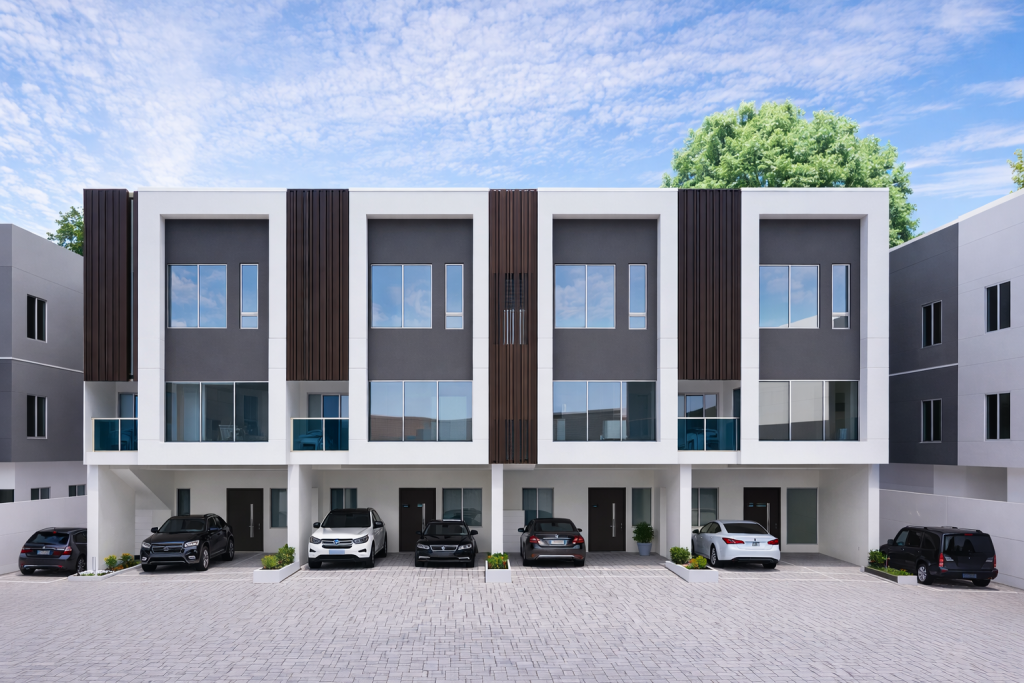
Imagine you secure a 3-Bedroom Maisonette at Greystone Residence in Maryland for the entry price of 320,000,000 naira
Initial Equity: 30% (₦96,000,000).
Payment Period: 12 months.
Final Value at Completion: ₦380,000,000.
Gross Profit: ₦60,000,000.
On paper, you’ve just made a 22% return on the total property value in under two years. If you calculate that return based only on your actual cost invested (the 96M deposit + installments), your Return on Equity (ROE) is significantly higher.
The Pros:
Speed: You get your capital back quickly to reinvest.
Zero Maintenance: You never have to deal with tenants, broken pipes, or “realtor friend” calls about leaky roofs.
The Cons:
Taxes and Fees: Every time you flip, you pay Consent fees, legal fees, and agency commissions. These eat into that ₦60M profit more than you’d think.
Market Timing: If you sell too early, you miss out on the “Boom” years that follow a project’s completion.
Strategy 2: The Hold
The “Buy and Hold” strategy is what the 1% of the 1% use. They don’t see a house as a product; they see it as a “Toll Gate.” A gateway to earn regular passive income.
When you buy that same unit for ₦320,000,000. Instead of selling at completion, you hold it for a decade.
Year 1-2: Construction phase (Equity building).
Year 3-10: Rental Income. If you use the short-let model we discussed in our Japa Real Estate Guide, you could be looking at an average annual yield of 10-12%.
Capital Appreciation: In 10 years, in a prime location like Maryland, that ₦320M property is conservatively worth ₦750,000,000 based on current Lagos property inflation trends.
The Result:
You’ve earned over ₦200 Million in rent AND your asset has grown by ₦480 Million in value. Total wealth created: ₦680,000,000+.
Side-by-Side: The Mathematical Comparison
| Feature | The Flip (2 Years) | The Hold (10-12 years) |
| Primary Goal | Quick Liquidity | Cash Flow & Appreciation |
| Effort Level | Moderate (Sales & Marketing) | High (Management or Agency) |
| Risk Profile | Market Price Volatility | Tenant & Maintenance Risk |
| Tax Efficiency | Low (Frequent transaction costs) | High (Deferred Capital Gains) |
| Wealth Impact | Linear (One-off profit) | Exponential (Compounding) |
Which One is Right for You?
Choosing between these strategies isn’t about which is “better”, it’s about where you are in your financial journey.
If you are still in the “Capital Building” phase of your life. If you need to grow your ₦100M into ₦300M so you can eventually afford to buy multiple units, flipping is your engine. It provides the speed you need to move up the ladder. (See our guide on The Resale Value Advantage to see how to pick the best units for a flip).
If you already have a stable income and you want to protect your wealth from the Naira’s volatility. Holding is the ultimate hedge. While the “paper wealth” in the stock market moves up and down, your tangible asset are growing. (Read: Real Estate vs Stocks Nigeria: Why Tangible Assets Win).
The truly sophisticated investors don’t actually choose. They do both.
They buy a unit at a project like Vedura Grove or Greystone, wait for it to appreciate, and then, instead of selling it, they use the now-valuable property as collateral to take a mortgage for their next property.
They keep the first house (for rent) and use the bank’s money to buy the second. This is the exact strategy we teach in The 40% Rule: How to Safely Leverage a Mortgage.
Conclusion:
Generational wealth isn’t built by accident. It’s built by knowing when to sprint and when to sit still.
In the current 2026 market, with the solid infrastructural upgrades happening on the Mainland, from the Red Line Rail to the gentrification of Maryland-the argument for long-term real estate investment in Lagos has never been stronger. (If you’re still skeptical about the Mainland, you need to read The Mainland Luxury Myth).
Are you ready to build your blueprint?
Whether you want to flip for a quick win or hold for a lifetime of rent, you need the right foundational asset. Contact Casafina Development today let our advisors help you run the numbers on Greystone, Vedura, or Ile Aje to see which strategy fits your 2026 goals.