
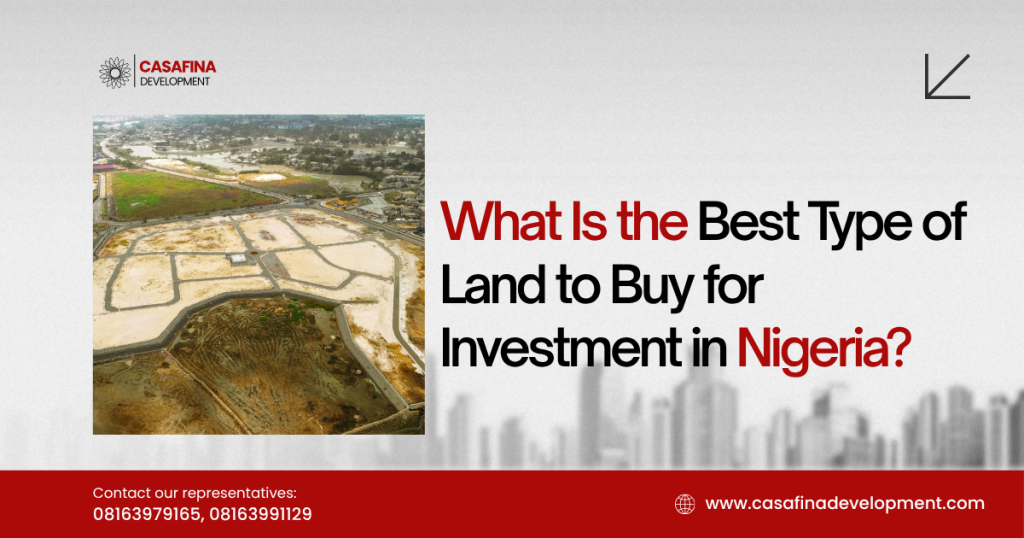
Ask ten Nigerian real estate investors where to deploy capital, and nine will tell you the exact same thing: “Land never loses value. Just buy land anywhere in Nigeria.”
While land is undeniably a finite, high-value asset across fast-growing commercial hubs and expanding urban centers, treating all land as equal is one of the fastest ways to trap your capital.
A plot of land isn’t merely dirt; it is a structured financial instrument. Your return on investment (ROI), cash flow timeline, risk profile, and exit strategy are entirely dictated by what type of land asset you acquire and how its approved usage aligns with economic growth corridors.
Whether you are seeking short-term rental yields, immediate residential development, or explosive long-term capital appreciation, here is a breakdown of the primary land investment categories and how they perform across Nigeria.
The 5 Core Categories of Land Investment
In global real estate finance, land investments are categorized by their current infrastructure state and intended future use. Understanding these five fundamental asset classes helps investors choose the right vehicle for their financial goals:
1. Raw and Undeveloped Land (Strategic Land Banking)
Raw land represents completely untouched property with no pre-existing civil infrastructure, utility connections, or immediate government building approvals.
The Strategy: Investors buy large plots where cities are expected to grow, like around airports, major highways, or state borders, and hold them until demand and land values increase.
Pros & Cons: Features the lowest entry cost per square meter and minimal holding costs. However, it generates zero immediate cash flow and demands extensive legal due diligence regarding state master plans and environmental restrictions.
2. Agricultural Land & Farmland
Farmland involves acquiring acreage designated for crop production, livestock rearing , or commercial agribusiness.
The Strategy: Unlike raw land, agricultural property provides an ongoing cash flow stream. Investors typically lease the acreage to commercial farming operators or cooperatives under structured agreements while holding the underlying asset for long-term land appreciation.
Pros & Cons: Acts as a historically resilient hedge against inflation. However, direct agricultural returns can fluctuate based on commodity cycles, and long-term gains rely on the land eventually being re-classified for urban expansion as the town grows.
3. Timberland and Natural Resource Land
Timberland focuses on acreage dedicated to growing and harvesting commercial timber for industrial processing.
The Strategy: Generates periodic capital liquidity as trees mature and are harvested for lumber or paper production.
Pros & Cons: Timber grows physically regardless of economic volatility, offering a stable wealth store. However, In Nigeria, individual investors rarely buy timberland because land ownership rules are complex. Most timberland is controlled by government reserves or big institutions.
4. Residential and Commercial Subdivisions (Serviced Estates)
Subdivisions involve purchasing large land parcels within or immediately adjacent to urban centers and installing comprehensive civil infrastructure before dividing the land into individual plots.
The Strategy: Master-planned developers acquire raw tracts, execute civil engineering (paved access roads, flood-control drainage, central power, perimeter fencing), secure institutional titles, and sell pre-vetted, serviced plots to private builders and corporate investors at an high rate.
Pros & Cons: Delivers faster, highly predictable capital growth and immediate development readiness. While entry prices are higher, it eliminates the unpredictable out-of-pocket costs of installing individual utilities.
5. Recreational & Leisure Land
Recreational land includes land assets acquired specifically for leisure, hospitality, or outdoor commercial activities.
The Strategy: In major urban and coastal regions across Nigeria, this translates into beachfront land, eco-resorts, country clubs, or event centers. Income is generated through seasonal resort leasing, short-let hospitality operations, or venue space rentals.
- Pros & Cons: Offers immediate cash flow potential tied to the booming hospitality and tourism sector, though capital expenditures for maintenance and site management can be a lot.
Critical Factors to Verify Before Acquiring Land in Nigeria
Regardless of which category fits your financial strategy, failing to verify three core fundamentals can endanger your capital:
Title Authenticity & Approved Usage: Confirm that the title documents are pre-vetted and legally clear with the respective state land registry. Crucially, ensure the land’s official permitted land use matches your intended usage before committing your money.
Topography & Soil Preparation: Dry land significantly reduces site preparation costs. However, waterlogged land often requires millions in sand filling, piling, and specialized civil engineering before construction can begin.
Infrastructure Readiness: Land lacking access roads, drainage channels, or power connectivity ties up capital indefinitely. Bundled infrastructure inside a master-planned estate often saves millions compared to solo utility setup.
Build Your Land Portfolio with Institutional Precision
Choosing the best type of land for investment depends on your main goal: Are you looking to build immediately, earn steady rental income, or grow your long-term wealth?
At Casafina Development, we remove the guesswork, title risks, and infrastructure friction from your real estate investment. Whether you are looking for secure, fully serviced residential estate plots in master-planned communities or strategic commercial hubs, our portfolio offers pre-vetted titles, premium civil infrastructure, and flexible investment structures designed to protect your capital.
If you have capital ready to invest in fully serviced estate plots or modern homes, connect with our team here with your budget and goals, and let’s discuss your options.