

You’ve likely seen 3D renders of projects. They are beautiful, pristine, and perfectly lit. They do an excellent job of selling the dream of a new home. But as savvy investors know, you don’t live in a render, you live in the layout.
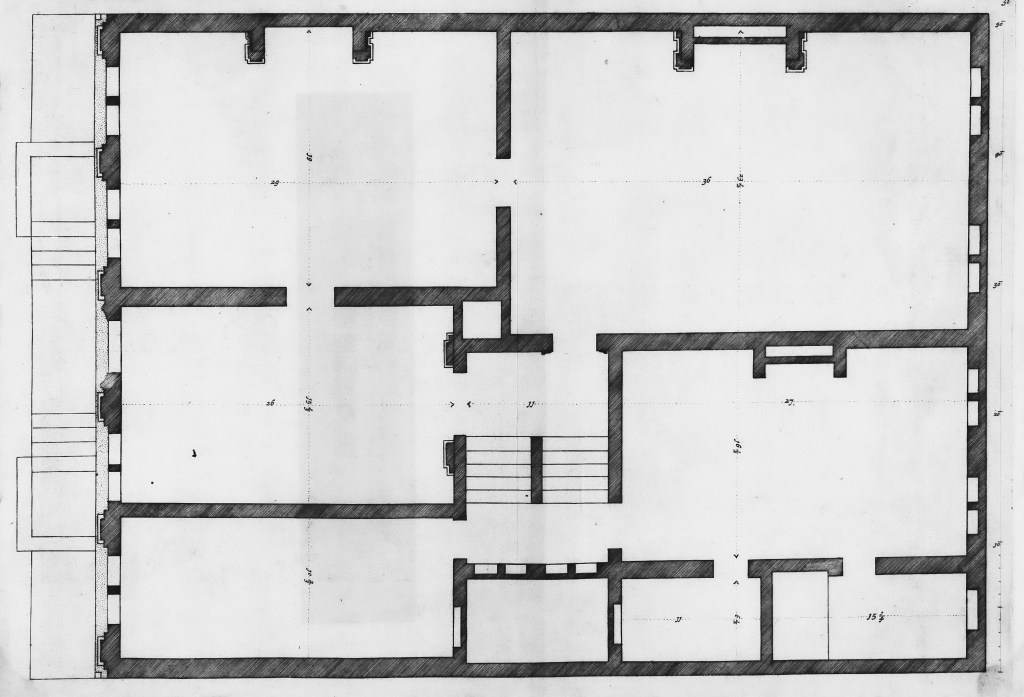
For many buyers in Lagos, the hesitation to commit to off-plan projects like Vedura Grove or Greystone Residence often comes down to one thing: a lack of visualization. It is difficult to look at a flat piece of paper covered in lines and measurements and truly “see” your life unfolding there.
However, the floor plan is the most honest document in real estate. While a render can use wide-angle lenses to make a room look massive, the floor plan never lies about the dimensions.
Learning to decode this document is a superpower. It allows you to spot potential issues before the foundation is even dug, and it helps you appreciate the difference between “big space” and “smart space.” Here is a 6 point extensive guide to reading a floor plan like an architect.
1. The “Flow” Test: Simulating Your Daily Routine
A real estate floor plan is a map of your future movement. To understand if a home will work for you, you need to mentally walk through it. We call this the Flow Test.
Don’t just look at the rooms in isolation; trace the lines that connect them.
You can create a scenario: Imagine you have just parked your car with five heavy bags of groceries. Trace your path to the kitchen. Do you have to walk through the formal living room? Is the journey long and winding? An efficient plan often places the kitchen near the service entrance or main entry to minimize this trek.
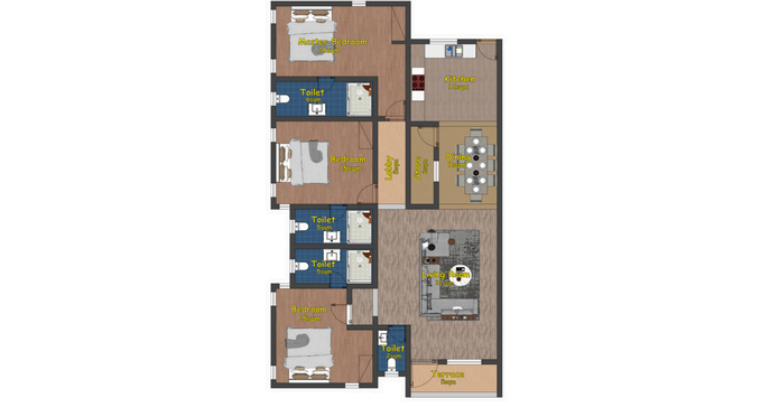
Or you can look closely at the Guest Toilet (Visitor’s Toilet) to know if the door opens directly into the living room? If so, your guests might feel uncomfortable using it while others are seated nearby. A superior design usually tucks this door around a corner or in a small lobby for privacy.
2. Understanding Zoning
Zoning is the separation of public and private spaces in a home. This is particularly important in Nigerian culture, where we value hospitality but also fiercely protect our privacy.
When you look at a floor plan, to understand zoning, draw an imaginary line down the middle. It should differentiate the public zone (anteroom, main lounge, dining, and guest toilet, where you host) from the private zone (the bedrooms and family lounge)
Check if the kitchen can be accessed from the bedrooms without being seen by someone sitting in the main lounge If the answer is yes, you have a high-quality layout.
3. Decoding the Symbols: What Do the Lines Mean?
Floor plans use a universal language of symbols. Understanding just a few of them can clarify the drawing instantly. These symbols include.
The Arcs (Door Swings): You will see quarter-circles attached to doorways. These show you which way the door swings. Why this matters: If a door swings into a small bathroom and hits the toilet, that space is going to be cramped.
Thick Lines and Thin Lines: Usually, thicker black lines represent structural (load bearing) walls, while thinner lines are partition walls. Why this matters: If you plan to renovate or break down a wall later to create an open-plan space, you can’t easily touch the thick lines.
The “Wardrobe” Box: Look for rectangles with an ‘X’ or lines inside them in the bedrooms. These represent built-in storage. You can check if the wardrobe placed against a wall would interfere with where you’d want to put your bed?
Read: 5 Important things to consider before buying a home in Lagos
5. Light, Air, and Orientation
A 3D render always shows the lights on, but a floor plan tells you if you’ll need them on during the day.
Cross ventilation is non-negotiable when developing a house in Lagos. Look at the living room. Are there windows on at least two different walls? Or, is there a clear path for air to enter through the front balcony and exit through a kitchen window? If air can’t move through the house, heat gets trapped.
You can also look for the window icons to know if they are placed in the center of the wall (good for light)
6. The Furniture Check
Finally, developers often scale down furniture in their drawings to make rooms look huge. A “Queen” bed on a drawing might actually be drawn at the size of a “Double” to fool the eye.
How to verify:
Look at the measurements of the furniture’s drawn in the plan. It will help you know how much space you have when everything is set up. A standard master bedroom should have enough space for a large bed, side tables, and a walkway, to avoid crab walking around it.
In Conclusion, reading a floor plan is about predicting the lifestyle the building will force you to live. It separates the emotional buyers from the strategic investors. At Casafina, we design from the “inside out” meaning we account for standard first, so that when you move into Vedura Grove or Greystone residence, you’ll enjoy the value of your decision.