
When analyzing real estate deals in Lagos, most investors focus entirely on one number: the initial purchase price. If a developer offers a 3-bedroom apartment for 20% below the market average, it feels like an instant win. You run the numbers, project your rental yield and income, and assume your ROI is secured.
But there is a silent killer in real estate investment that doesn’t show up on a spreadsheet-rapid deterioration.
In professional property economics, there is a concept known as Lifecycle Costing (LCC)- a financial evaluation method that calculates the total cost of owning an asset over its entire lifespan. According to standards established by the Royal Institution of Chartered Surveyors (RICS), the initial construction or purchase cost of a building typically represents only 10% to 20% of its total expense over its lifespan. The remaining 80% comes from ongoing maintenance, repairs, and operation.
If a developer cuts corners by using substandard concrete grades, cheap plumbing, or low-quality electrical wiring, that 20% discount you got at purchase will violently evaporate and within five years, aggressive maintenance costs can wipe out up to 40% of your expected rental yield.
To increase rental yield, you have to stop looking at aesthetics and start looking at structural durability. Here are four reasons why cheap materials are destroying your buy-to-let profits.
1. The Plumbing and Electrical Drain
The most expensive parts of a house are the parts you cannot see.
When a developer uses inferior PVC pipes or substandard electrical cables hidden behind the drywall, the property is a ticking time bomb and in Lagos, where water pressure fluctuates and the power grid is unstable, cheap infrastructure fails rapidly.
If a concealed pipe bursts in your rental unit, you aren’t just paying for a plumber. You are paying to break the wall, replace the pipe, re-plaster the wall, and repaint the entire room. If this happens twice a year, your property maintenance costs will completely cannibalize your rental income.
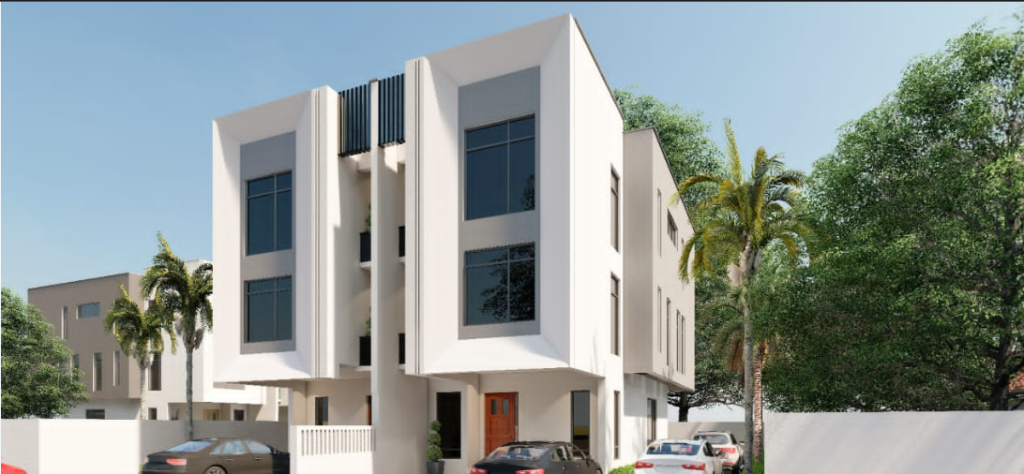
True luxury is invisible engineering. At Casafina Development, our MEP (Mechanical, Electrical, and Plumbing) specifications for projects like Greystone Residence are strictly vetted to withstand decades of heavy use without failing.
2. Aesthetic Decay and how it affects Rental Yield
Substandard finishes age terribly. When your property looks tired and worn out after just two years, you suffer from Tenant Churn. High-paying, tenants do not tolerate peeling paint or broken cabinets. When their lease expires, they will move out to a newer building.
Every time a tenant moves out, you lose money. You face vacancy periods where the house earns zero income, and you have to spend millions on renovations just to make the unit presentable for the next tenant.
3. The Structural Premium: Why Quality Commands Higher Rent
If you want to charge top-tier rent, the property must objectively feel solid.
When a prospective tenant walks into an apartment and closes a solid core door, they feel the weight. When they walk across the floor and it doesn’t creak, or they turn on the tap and the water pressure is flawless, they subconsciously register the property as “Premium.”
This is the psychological advantage of high-quality construction. Tenants are willing to pay above-market rates for peace of mind. A well-engineered building doesn’t just save you money on repairs; it actively increases your top-line revenue.
(Curious about how specific architectural layouts also boost your ROI? Read: The Psychology of Space: How Home Layout Impacts Mental Health).
4. The Energy Inefficiency Tax
We often think of building materials strictly in terms of concrete and wood, but insulation, window glazing, and wiring play a massive role in operational costs.
Substandard windows and poor roof insulation turn an apartment into an oven during the Lagos dry season. This forces your tenants to run their air conditioning units constantly, driving up their energy bills. If the tenant is unhappy with the cost of living in the unit, they will negotiate a lower rent or leave entirely.
If you convert the unit to a short-let, you are the one paying that inflated energy bill, which directly slaughters your profit margin.
Buying into developments that prioritize energy-efficient infrastructure and solar-ready capabilities ensures that operational costs remain predictably low. (We broke down exactly why this is a non-negotiable feature in our recent article: Solar-Ready & Smart: Why Energy Independence is the Ultimate Flex).
Conclusion
In the buy-to-let investment game, cheap is always expensive.
When you buy a unit at a premium development, you are not just paying for a fancy address. You are paying for a meticulous Lifecycle Costing strategy. That guarantee that the roof won’t leak, the pipes won’t burst, and the value of the asset will outpace inflation.
Do not let substandard materials wipe out your hard-earned wealth.
Are you ready to invest in an asset engineered for sustained, high-yield passive income?
Contact our advisory team today to explore the development at Greystone Residence, the smartest addition to your investment portfolio.